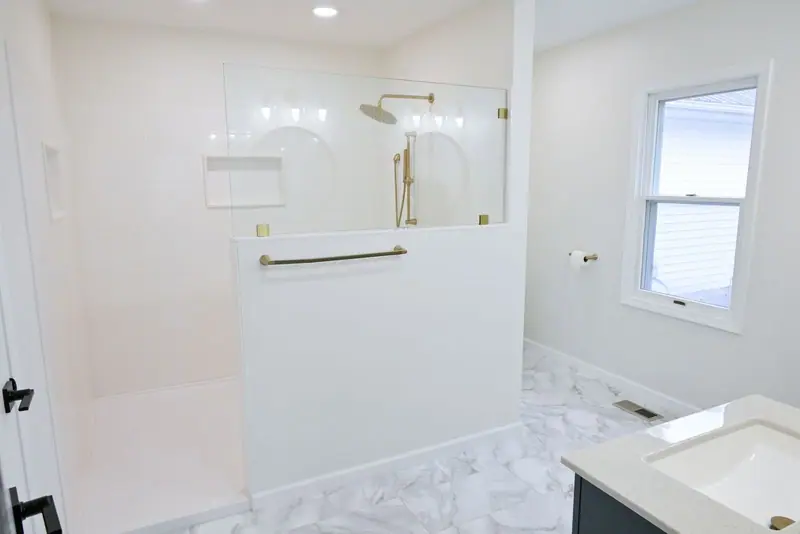
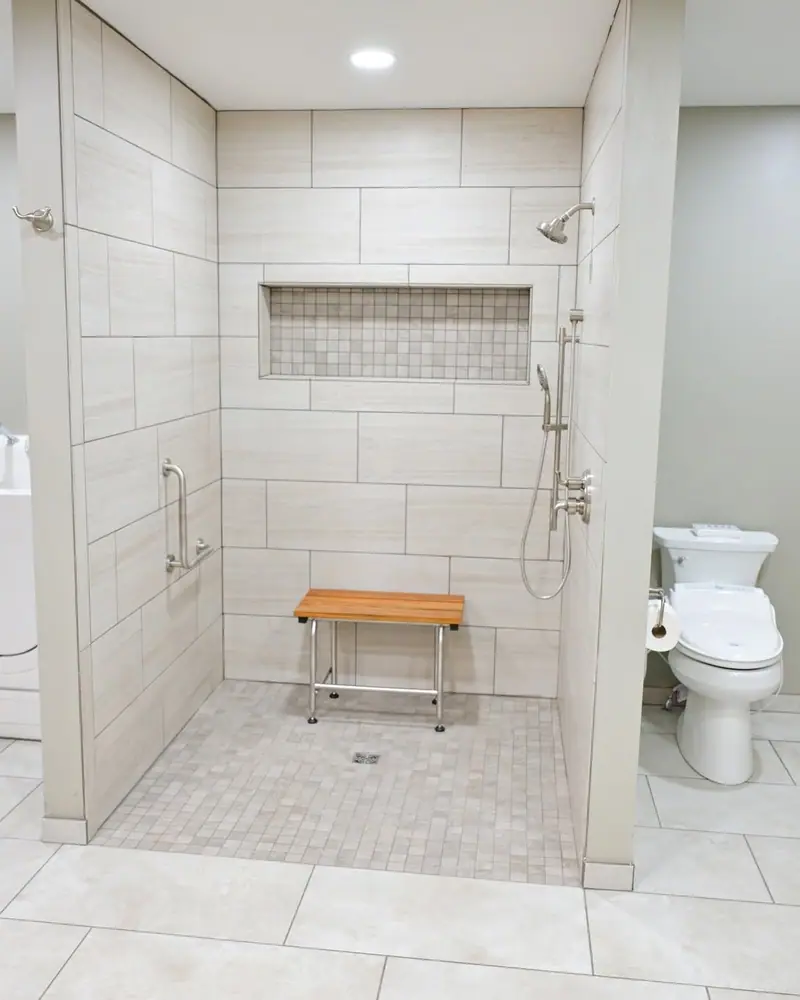
A tub-shower combo is in almost every older home around here. More and more of the bathrooms we remodel are trading that tub for a walk-in shower. Here's how to decide whether that's right for you.
Why people make the switch
- Safety. Stepping over a tub wall onto a wet surface is one of the riskier things we do every day. A walk-in shower with a low or no curb removes that step.
- Staying in your home. If you plan to be in the house for the long haul, a shower you can walk into, with a bench and grab bars, makes that much easier.
- Space and light. A glass panel or door instead of a tub and curtain makes a small bathroom feel bigger.
- Cleaning. No tub to scrub, and fewer corners to collect grime.
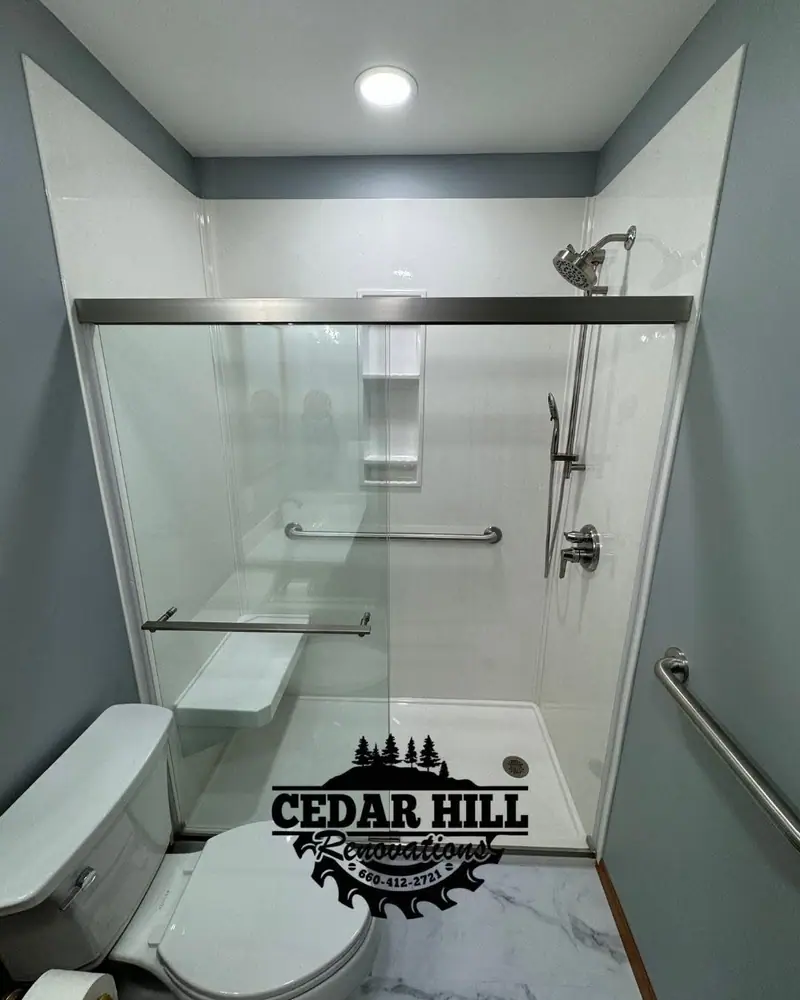
When to keep a tub
If you have young kids, or you love a bath, keep one. For resale, many buyers like to see at least one tub in the house. If you have two bathrooms, a common approach is a walk-in shower in the main bath and a tub in the hall bath.
What makes a walk-in shower easy to live with
- A low or curbless entry, with the floor sloped properly to the drain.
- Grab bars anchored into solid backing, not just drywall. Solid backing goes in the walls while they're open.
- A bench or seat, built in or fold-down.
- A handheld shower on a slide bar, so it works for everyone in the house.
- A niche for shampoo, so nothing sits on the floor.
- Slip-resistant floor tile, like small mosaics with more grout lines for grip.
What's involved
Converting a tub to a shower means removing the tub, adjusting the drain and valve, building a waterproof shower base and walls, and finishing with tile or panels and glass. It's usually a contained project that doesn't touch the rest of the house.
Thinking about it? We'll look at your bathroom and lay out a couple of options. Call 660-412-2721 or book a project call. You can also see real before and afters on our bathroom remodeling page.