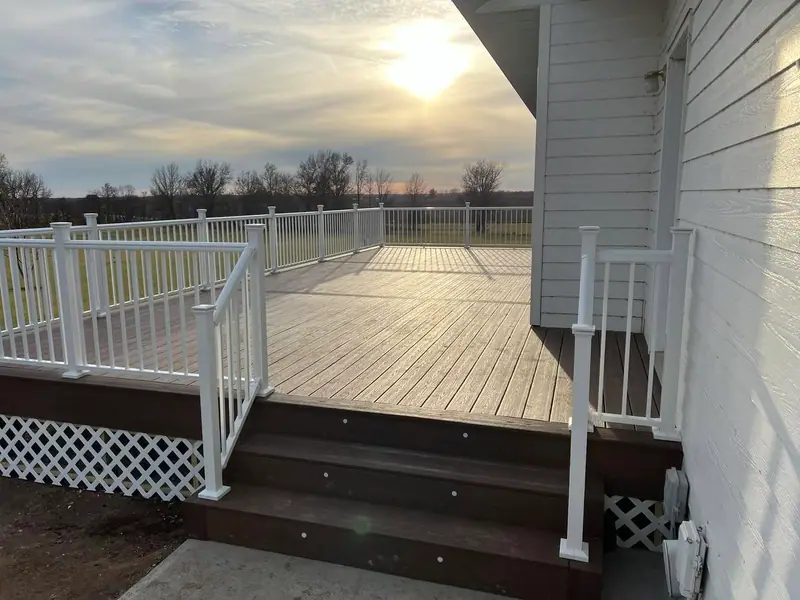
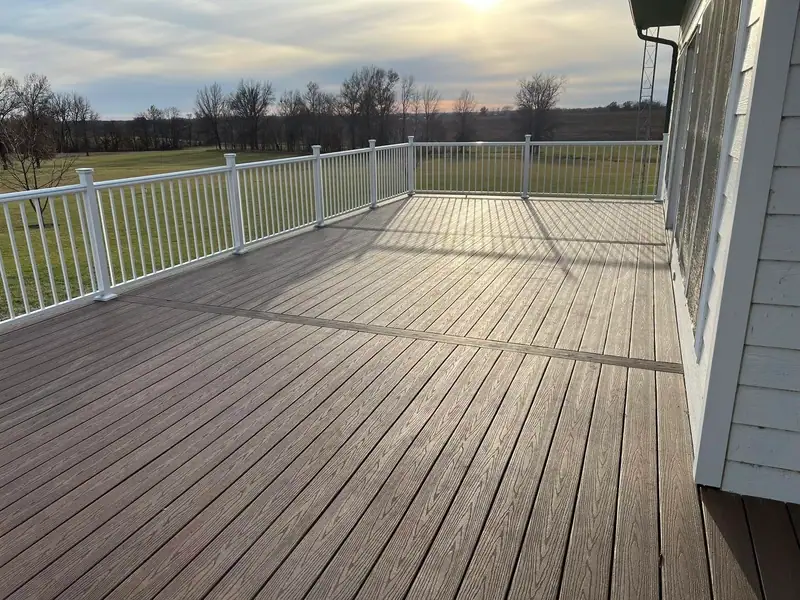
We build both kinds of decks, and both can be a great choice. The right one comes down to two questions: how much do you want to spend up front, and how much time do you want to spend on upkeep later?
Pressure-treated lumber
Treated pine is the classic deck board. It's chemically treated to resist rot and insects, it's widely available, and it costs the least up front.
- Pros: lowest starting cost, real wood look, can be stained any color, easy to repair or add on to later.
- Cons: needs cleaning and a fresh coat of stain or sealer every few years. Without it, boards can gray, crack, cup, and splinter.
Missouri's mix of humid summers and freeze-thaw winters is hard on unprotected wood, so plan on that upkeep if you go this route.
Composite
Composite boards are made from a blend of wood fibers and plastic, usually with a protective outer shell. They cost more to buy, but they skip most of the maintenance.
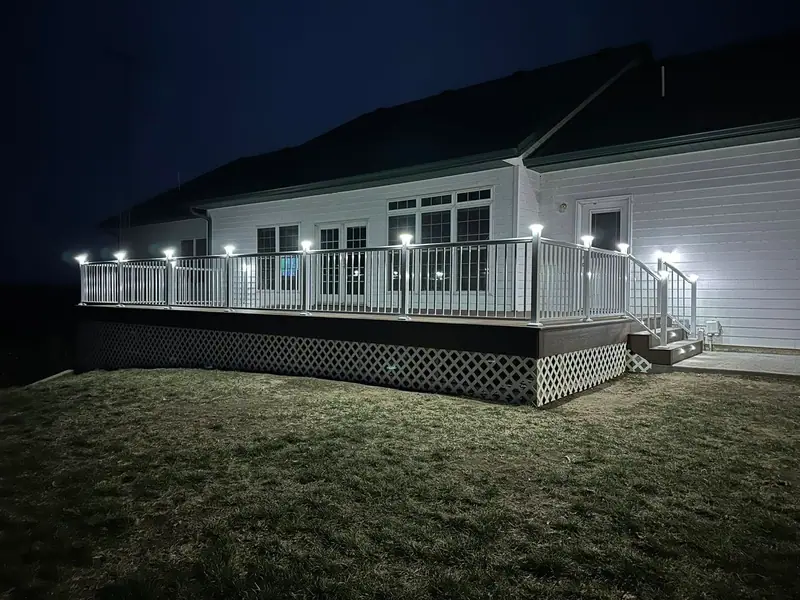
- Pros: no staining or sealing, won't splinter, resists fading and stains, looks the same year after year. Pairs well with vinyl or aluminum railings and built-in lights.
- Cons: higher up-front cost, and boards can get warm in direct afternoon sun.
Side by side
| Treated lumber | Composite | |
|---|---|---|
| Up-front cost | Lower | Higher |
| Yearly upkeep | Clean, then stain or seal every few years | Wash it off |
| Splinters | Can happen as it ages | No |
| Color | Any stain you like | Set by the board you pick |
| Best for | Tighter budgets, DIY-friendly owners | Low maintenance, long-term homes |
What doesn't change
Whichever boards you choose, the frame underneath is pressure-treated lumber, and that's where a deck's lifespan is really decided. Proper footings, the right fasteners, flashing where the deck meets the house, and correct joist spacing for the board you're using matter more than the surface.
Not sure which is right for you? We'll look at your yard, talk through how you'll use the deck, and price it both ways so you can compare. Call 660-412-2721 or book a project call.